
Washington/Caracas, January 7, 2026 —
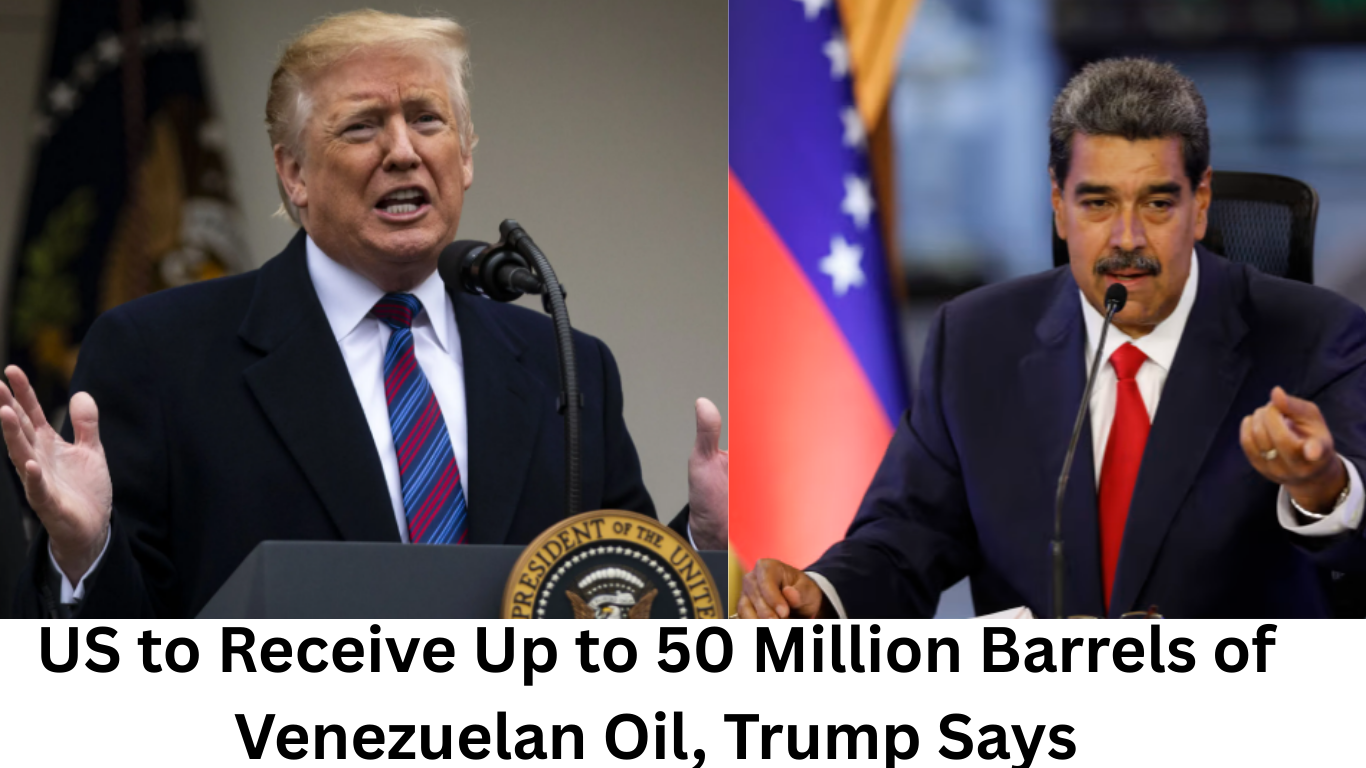
US President Donald Trump announced on Tuesday that the United States will receive between 30 million and 50 million barrels of Venezuelan crude oil at market prices, in what he described as a strategic move to benefit both American and Venezuelan interests. The announcement comes amid heightened political tensions following a recent U.S. military operation in Venezuela and ongoing negotiations with interim authorities in Caracas.
In a post on his social media platform, Truth Social, Trump wrote that “Interim Authorities in Venezuela will be turning over between 30 and 50 million barrels of high-quality, sanctioned oil” to the United States. He added that the oil would be sold at prevailing market prices and that proceeds from the sales would be controlled by the U.S. government to ensure funds are used to benefit citizens of both countries.
“This oil will be sold at its market price, and that money will be controlled by me, as President of the United States of America, to ensure it is used to benefit the people of Venezuela and the United States,” Trump said in his post, also directing U.S. Energy Secretary Chris Wright to execute the plan immediately. The administration plans to have the crude loaded onto storage ships and transported directly to U.S. unloading docks.
Table of Contents
ToggleBackground and Domestic Context
The announcement follows a U.S. military operation in Caracas that resulted in the capture of Venezuelan President Nicolás Maduro, who was flown to the United States to face federal charges, according to U.S.A officials. The raid significantly altered the political landscape in Venezuela, and subsequent negotiations with interim leaders have centered on economic and energy issues.
Under long-standing sanctions and an export blockade imposed in late 2025, much of Venezuela’s crude oil has remained in storage rather than reaching global markets. By redirecting between 30 and 50 million barrels of “sanctioned oil” to the U.S., the Trump administration argues it can support domestic energy needs while also helping Venezuela stabilize its economy.

International and Economic Implications
Energy markets reacted to the news, with U.S.A crude prices slightly declining in early trading as the anticipated supply increase was priced in by traders. Analysts say the deal could relieve some global supply pressure, although Venezuela’s long-term production capacity remains constrained by years of underinvestment and infrastructure challenges.
While the United States positions the arrangement as a mutual benefit, critics — including officials aligned with the Maduro regime — have condemned the United States’ actions as interference in Venezuela’s sovereignty. Venezuelan state actors have called the oil transfer and political developments a “breach of international norms” and allegations of U.S. attempts to control the country’s energy resources.
Strategic and Geopolitical Considerations
Venezuela has historically been one of the world’s largest holders of crude oil reserves and, in recent years, shipped significant volumes to buyers including China, a top customer prior to the imposition of U.S.A sanctions. Reallocating Venezuelan oil shipments to the United States — potentially diverting supplies that might otherwise have gone to Asian markets — underscores the geopolitical dimension of the deal amid broader U.S.A efforts to reshape regional alliances and energy partnerships.
U.S.A officials have indicated they are also planning meetings with major American oil firms — including representatives from ExxonMobil, Chevron, and ConocoPhillips — to discuss involvement in Venezuela’s oil sector and potential investment opportunities tied to the transfer.
Reactions and Future Outlook
Domestic and international reactions have been mixed. Supporters of the arrangement argue it enhances U.S.A energy security and provides a pathway to reintegrate Venezuelan crude into global markets under controlled and transparent terms. Detractors, however, caution that managing and monetizing foreign oil reserves — particularly those previously subject to sanctions — raises complex legal, economic, and diplomatic questions.
As implementation begins, policymakers and energy analysts will be watching closely to see how the transfer affects Venezuela’s production outlook, U.S.A energy pricing, and broader Latin American geopolitical dynamics in the months ahead.
Visit GPS NEWS HUB