
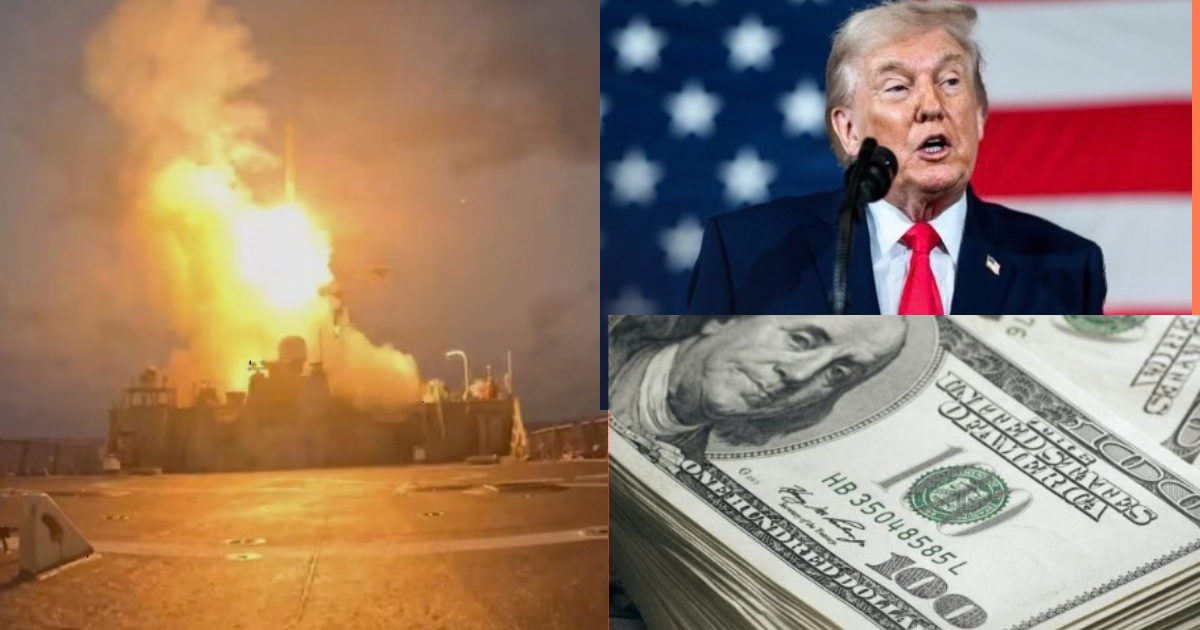
The first 100 hours of the United States’ military campaign against Iran—known as Operation Epic Fury—are estimated to have cost around $3.7 billion, according to an analysis by the Washington-based think tank Center for Strategic and International Studies (CSIS). The report highlights the enormous financial burden of modern warfare, particularly during the initial phase of large-scale military operations.
Table of Contents
ToggleA Costly Opening Phase

According to the CSIS assessment, the first four days of the operation averaged nearly $891 million per day. Much of the expenditure was driven by the use of advanced weapons systems, precision-guided munitions, and air-defense interceptors deployed to counter Iranian missiles and drones.
Military analysts note that the opening phase of any war is typically the most expensive. During this period, armed forces conduct intensive airstrikes, deploy large numbers of aircraft and naval vessels, and activate expensive defense systems to establish dominance on the battlefield. These early actions are designed to cripple enemy infrastructure, destroy air defenses, and weaken command-and-control networks.
Massive Military Deployment
Operation Epic Fury has involved a large-scale deployment of American and allied military assets across the Middle East. Reports indicate that thousands of precision munitions have been launched at Iranian military targets, including missile facilities, air-defense systems, and strategic infrastructure.
The campaign has also involved advanced aircraft, submarines, drones, and long-range bombers operating from both land and sea. In the first 100 hours alone, the United States and its allies reportedly carried out strikes on nearly 2,000 targets, making it one of the most intense opening phases of a modern military conflict.
Such operations require extensive logistical support, including fuel, maintenance, and intelligence systems, all of which significantly increase the financial cost of the campaign.
Unbudgeted War Expenses

One of the key concerns raised by the CSIS report is that a large portion of the estimated $3.7 billion cost was not previously allocated in the US defense budget. This means the Pentagon may eventually need additional funding from Congress to sustain the military campaign if it continues for weeks or months.
Defense analysts warn that prolonged military operations could place significant pressure on US military resources and financial planning. Expensive missile systems and precision weapons used in the early phase must be replenished, potentially leading to new defense spending requests.
Strategic Objectives of the Operation
The United States launched Operation Epic Fury with the stated aim of weakening Iran’s military capabilities and preventing threats to US forces and allies in the region. The operation has focused heavily on targeting missile launch sites, drone infrastructure, naval assets, and strategic command centers.
Officials have described the campaign as one of the most technologically advanced and coordinated military operations in recent years. However, the escalating conflict has also raised fears of wider regional instability and disruptions to global energy markets.
What Lies Ahead
While the initial phase of the operation has been extremely costly, analysts suggest that the daily cost of the campaign could decline if the pace of high-intensity strikes slows and cheaper military alternatives are used. However, if the conflict escalates or expands geographically, overall costs could rise significantly.
Beyond financial implications, the war’s broader impact—ranging from geopolitical tensions to global oil supply disruptions—continues to shape international reactions.
As Operation Epic Fury unfolds, both military strategists and policymakers will closely watch whether the massive early investment translates into long-term strategic gains or leads to an extended and expensive conflict.
Visit GPS NEWS HUB