
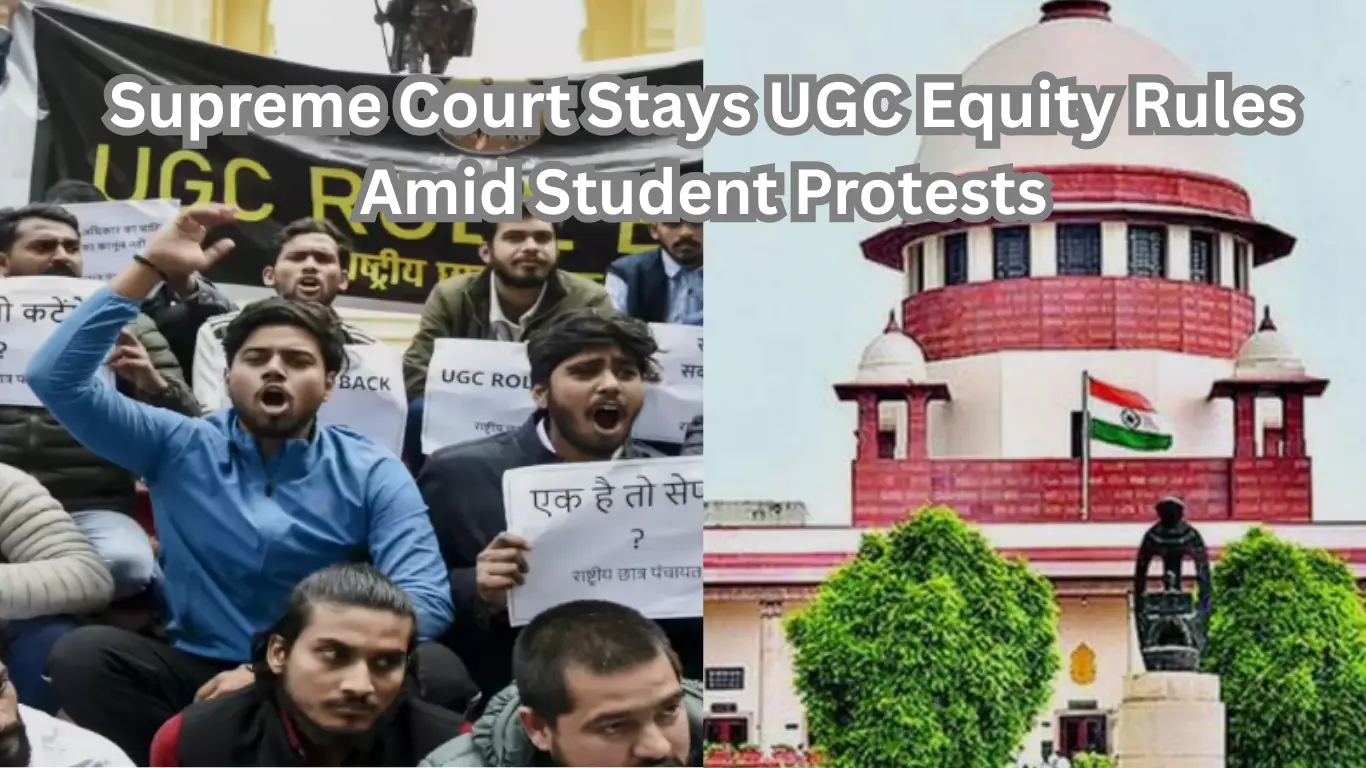
India’s Supreme Court on Friday stayed the implementation of the University Grants Commission’s (UGC) much-debated equity regulations, a move that has immediately reverberated across campuses nationwide. The decision came in response to pleas challenging the constitutional validity and clarity of the rules, which were intended to reshape higher education admissions policies in a bid to improve equity for marginalised communities.
The court’s order, issued late Thursday, effectively halts the rollout of the regulations — formally titled the University Grants Commission (Equity and Inclusion in Higher Educational Institutions) Regulations, 2025 — until further hearings. The stay was granted while the Supreme Court considers petitions that argue the regulations are vague, overbroad, and inconsistent with constitutional equality guarantees.
Table of Contents
ToggleVagueness and Constitutional Arguments
Petitioners, including student groups and legal experts, contended that several provisions of the UGC regulations lacked clarity on implementation mechanisms and could lead to arbitrary outcomes. They argued that fundamental rights, including equal treatment under the law and academic freedom, might be adversely affected without clear legal safeguards.
During the hearing, the Supreme Court raised concerns about how key terms — such as “equity index” and “inclusion markers” — were defined in official documents and whether these would stand up to constitutional scrutiny. The bench also questioned the absence of detailed procedures for implementation, particularly in a diverse higher education system with varying admission criteria.
In its brief order, the court noted that the regulations’ “complete vagueness” warranted a pause to prevent potential disruption to ongoing admission cycles across universities and colleges. It also emphasised the need to protect rights guaranteed under Articles 14 and 19 of the Constitution, which cover equality before the law and the freedom of expression and movement.
Student Protests Erupt Nationwide
The Supreme Court’s interim stay sparked immediate reactions on university campuses, with students in institutions such as Jawaharlal Nehru University (JNU) staging protests to voice their concern. At JNU, students held rallies and raised slogans opposing the stay, asserting that the equity rules were a much-needed step toward dismantling systemic barriers that marginalised castes and communities face in accessing higher education.
Protesters argued that the pause undermines years of advocacy around social justice and inclusion. “Equity was not just a policy — it was a promise to end historical oppression in education,” said one student leader during the demonstration, referring to socio-economic and caste-based imbalances in elite academic institutions.
Student unions underscored that the Equity Regulations sought to create a more level playing field by factoring in socio-economic disadvantage, first-generation status, and regional disparities in admissions. Supporters of the regulations have also said that the guidelines would have modernised affirmative action policies by making them more responsive to contemporary inequities.

Government and UGC Responses
Sources within the Ministry of Education and the UGC have indicated that they respect the Supreme Court’s decision and will cooperate fully with the legal process. Officials noted that the equity regulations were drafted after extensive consultations with academic experts and stakeholders, but acknowledged that concerns about design and implementation had emerged once the public and educational community began to engage with the text in depth.
The UGC has not specified a timeline for defending the regulations before the Supreme Court or for amending the content following judicial feedback.
Looking Ahead
Legal experts say the next hearings will likely focus on balancing the constitutional mandate for equality with the practical challenges of policy clarity and implementation. The stakes are high, given that amendments to admissions frameworks could reshape the competitive landscape for students across India’s sprawling higher education ecosystem.
As the legal review unfolds, higher education institutions are expected to continue preparatory work for the academic year, even as students and faculty closely monitor the evolving policy environment. The ultimate decision on the equity regulations could have implications for affirmative action policies, social justice frameworks, and the broader relationship between law and higher education governance in India.
Visit GPS NEWS HUB