
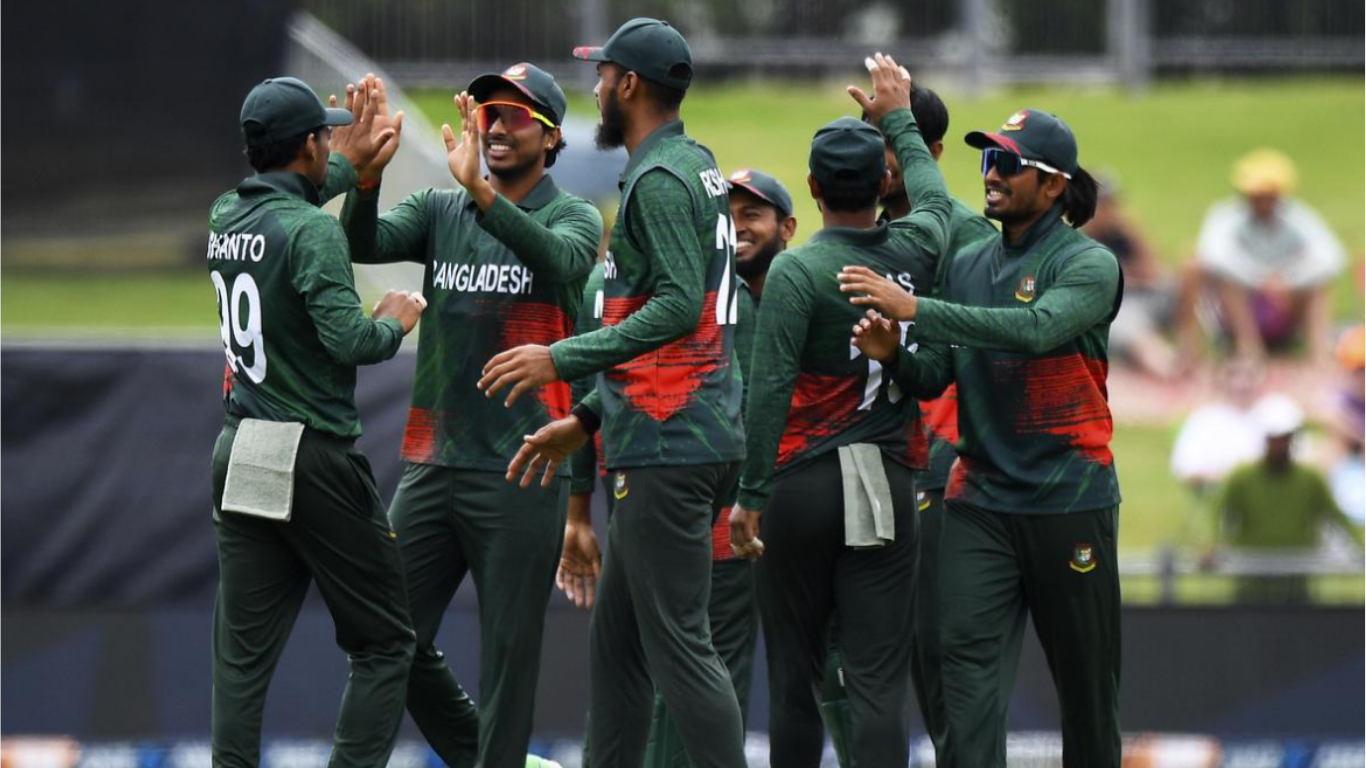
A major controversy has erupted ahead of the ICC Men’s T20 World Cup 2026, with Bangladesh’s participation in the tournament thrown into doubt due to an escalating venue dispute involving India, the Bangladesh Cricket Board (BCB) and the International Cricket Council (ICC). The situation, already fueled by diplomatic tensions, has now taken a new turn with the Pakistan Cricket Board (PCB) offering to host Bangladesh’s World Cup matches, even as the ICC prepares to take a final decision on the matter.

Table of Contents
ToggleOrigins of the Dispute: Mustafizur Rahman Snub and Venue Concerns
The standoff began earlier this month after Bangladesh pacer Mustafizur Rahman was unexpectedly released from his Indian Premier League (IPL) franchise, the Kolkata Knight Riders, following directions reportedly connected to broader “developments all around.” Bangladesh’s government and BCB expressed strong dissatisfaction with the move, with the government subsequently banning IPL broadcasts in the country in protest.
In response, the BCB formally informed the ICC that it would not be comfortable sending its team to India for the T20 World Cup, citing security concerns and national pride — a stance rooted in both sport and broader political sensitivities between the two countries. Originally, Bangladesh was scheduled to play all four of its group stage matches in India — three at Kolkata and one at the Wankhede Stadium in Mumbai.
The BCB has instead requested that its fixtures be moved to co-host Sri Lanka, where a separate group of matches in the tournament will take place. Sri Lanka currently co-hosts the ICC event alongside India under a hosting agreement valid through 2027. However, the ICC has so far rejected a wholesale change of venue, pointing to logistical constraints and the tournament schedule being finalized with venues and broadcasting arrangements already locked in.
Pakistan’s Overture: A ‘Plan B’ for Bangladesh
In a surprising development, the Pakistan Cricket Board has offered to host Bangladesh’s matches should Sri Lanka be unable or unwilling to serve as an alternate venue. PCB sources described the board’s move as a contingency plan, positioning Pakistan as a neutral ground ready to step in if the ICC cannot accommodate the Sri Lanka request. Pakistani venues, they noted, are “ready and fully equipped” after successfully hosting recent events such as the Champions Trophy 2025 and women’s ODI qualifiers.
The PCB also wrote to the ICC backing Bangladesh’s stance to avoid playing in India, emphasizing that the demand was justified and urging the council to accept the BCB’s proposal. By copying all ICC board members on the letter, the PCB signaled solidarity with Bangladesh, framing their offer as both diplomatic and practical.
However, cricket analysts and insiders caution that Pakistan’s offer — while symbolically strong — is unlikely to force a venue shift at this late stage. Logistic challenges, broadcasting rights, and existing contractual agreements complicate any abrupt relocation of matches from India, especially with the tournament just weeks away.
ICC, BCB and BCCI Positions
The ICC has maintained that the tournament should proceed as per the planned schedule and venues. ICC officials have been engaged in multiple discussions with the BCB and other stakeholders, including a recent meeting in Dhaka, but no consensus has emerged. The council has reportedly issued an ultimatum to Bangladesh to confirm participation by January 21, warning that failure to decide could lead to forfeiture of their spot.
From the BCB’s perspective, the issue goes beyond logistics. Government sports advisors have publicly stated that the team’s presence in India would undermine national honor and player security if ongoing grievances — particularly around the Mustafizur Rahman incident — are not addressed. The board’s leadership appears committed to its stance, even at the risk of withdrawal.
Representing the BCCI, Indian cricket authorities have rejected the feasibility of moving Bangladesh’s matches out of India, citing the complexities of reworking the match schedule, travel plans, hotel bookings, and broadcast commitments tied to the tournament’s commercial structure.
Potential Outcomes and Broader Impact
If the dispute remains unresolved, the ICC may be forced to consider alternative scenarios, including the unlikely possibility of Scotland replacing Bangladesh based on current ranking positions. This would significantly alter the contest’s competitive landscape and could dampen fan engagement in a tournament already shaping up to be one of the most watched in cricket history.
Pakistan’s alignment with Bangladesh also raises the specter of broader diplomatic implications, as cricket frequently mirrors political contexts in South Asia. The PCB’s move has drawn mixed reactions within the sport, with some former players questioning reports of halted Pakistan preparations — though the board’s official position remains supportive of Bangladesh’s stance.
Officials from the ICC are expected to pronounce a final verdict in the days ahead, a decision that will test the council’s capacity to balance sporting interests, logistical realities, and geopolitical sensitivities in a region where cricket is both beloved and deeply intertwined with national identity.
Summary of the Situation
Bangladesh may not play T20 World Cup matches in India due to security concerns and Mustafizur Rahman’s IPL exclusion.
BCB wants matches moved to Sri Lanka, but ICC has resisted changing venues.
Pakistan Cricket Board has offered to host Bangladesh’s matches as a “Plan B” and written to the ICC backing their stance.
- ICC is considering all options ahead of a critical decision on participation and scheduling.
Visit GPS NEWS HUB