
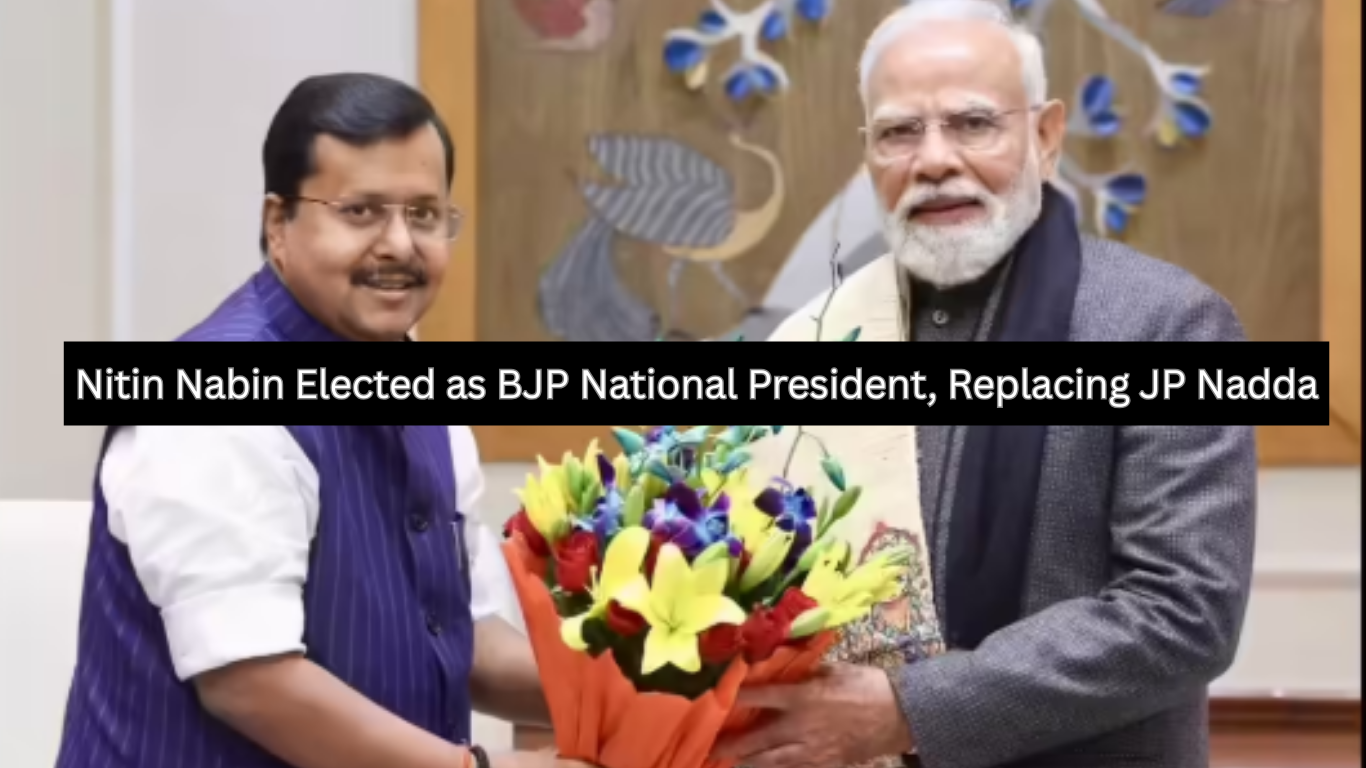
The Bharatiya Janata Party (BJP) on Tuesday elected Nitin Nabin as its new national president, marking a significant leadership change in India’s ruling party ahead of the upcoming general elections. Nabin succeeds Jagat Prakash (JP) Nadda, who had served as party chief since 2020. The decision underscores Prime Minister Narendra Modi’s continued influence within the party as it positions itself for another electoral battle at the national level.
At 47 years old, Nitin Nabin — a seasoned party worker and legislator from Bihar — becomes one of the youngest leaders to assume the top post in the BJP’s history. His elevation reflects both the party’s ongoing generational shift and its strategy of blending organizational experience with a younger leadership footprint.
Table of Contents
ToggleA New Leadership Era in the BJP

The announcement came after a meeting of the BJP’s parliamentary board in New Delhi, where senior party leaders formally endorsed Nitin Nabin’s candidature. In his first public remarks following the election, Nabin pledged to uphold the party’s core values while strengthening its grassroots networks across states. He stressed unity and cohesion as key themes for the months ahead.
Nitin Nabin has deep roots within the party. He served as a youth leader and has been elected multiple times as a Member of the Legislative Assembly (MLA) from Bihar’s Patna Sahib region, where he has maintained strong public support. His political journey reflects his reputation as a diligent organizer and a steady political operator within BJP ranks.
In his first address as president, Nabin highlighted the importance of expanding the BJP’s reach, particularly among young voters and first-time electors. “Our agenda is to work tirelessly for the development and prosperity of all sections of society,” he said, emphasizing the need to maintain momentum from the party’s recent electoral gains in state polls.
Modi’s Continued Influence
Prime Minister Narendra Modi — widely viewed as the BJP’s most dominant leader over the past decade — publicly endorsed Nitin Nabin’s leadership. Describing Nabin as a “dedicated party worker,” Modi said he looked forward to working closely with the new president in advancing the party’s vision. “He is my boss in party matters, and I am confident he will lead the BJP with determination and integrity,” Modi was quoted as saying at a party event.
Modi’s support for Nitin Nabin highlights the broader strategic alignment within the BJP, as the party seeks to balance the central leadership’s directives with regional outreach and organizational strength. Analysts say that Modi’s endorsement likely played a decisive role in securing party consensus for Nabin’s elevation.
Organizational and Electoral Implications
Political commentators view the leadership change as more than a routine party reshuffle. With general elections expected later in 2026, the BJP is positioning itself to renew voter engagement and reinforce its organizational machinery across India’s diverse electoral landscape. Nitin Nabin’s tenure will be watched closely for how it shapes campaign strategies, candidate selection, and coalition negotiations within key states.
Some analysts say the BJP’s choice of a younger president reflects a deliberate effort to connect with millennial and Gen Z voters — demographic segments that are crucial in urban and semi-urban constituencies. Others note that the party’s leadership transitions often reflect internal consensus building rather than open factional contestation.
Grassroots Reaction and Party Unity
Within the party, reactions to Nitin Nabin’s elevation have been largely supportive. Senior BJP leaders from across regions praised his organizational skills and experience. They emphasized continuity and stability, noting that a smooth leadership transition would help the party maintain focus on governance and election preparedness. (Hindustan Times; hindustantimes.com)
Grassroots workers, particularly in Bihar where Nabin has strong political roots, welcomed the announcement. Many party activists said they expect the new leadership to amplify outreach programs, increase engagement with local communities, and enhance youth participation in political processes.
Challenges Ahead
Despite strong support within its ranks, the BJP faces continuing challenges, including managing regional allies, addressing economic concerns among voters, and sustaining growth in states where opposition parties have made recent inroads. Nitin Nabin’s leadership will be tested on how effectively the party responds to these challenges while navigating the electoral terrain leading into a high-stakes election cycle.
As he assumes office, Nitin Nabin inherits both the legacy and the expectations of leading India’s dominant political party, with a focus on expanding its reach, consolidating its achievements, and engaging a new generation of voters.
Visit GPS NEWS HUB