
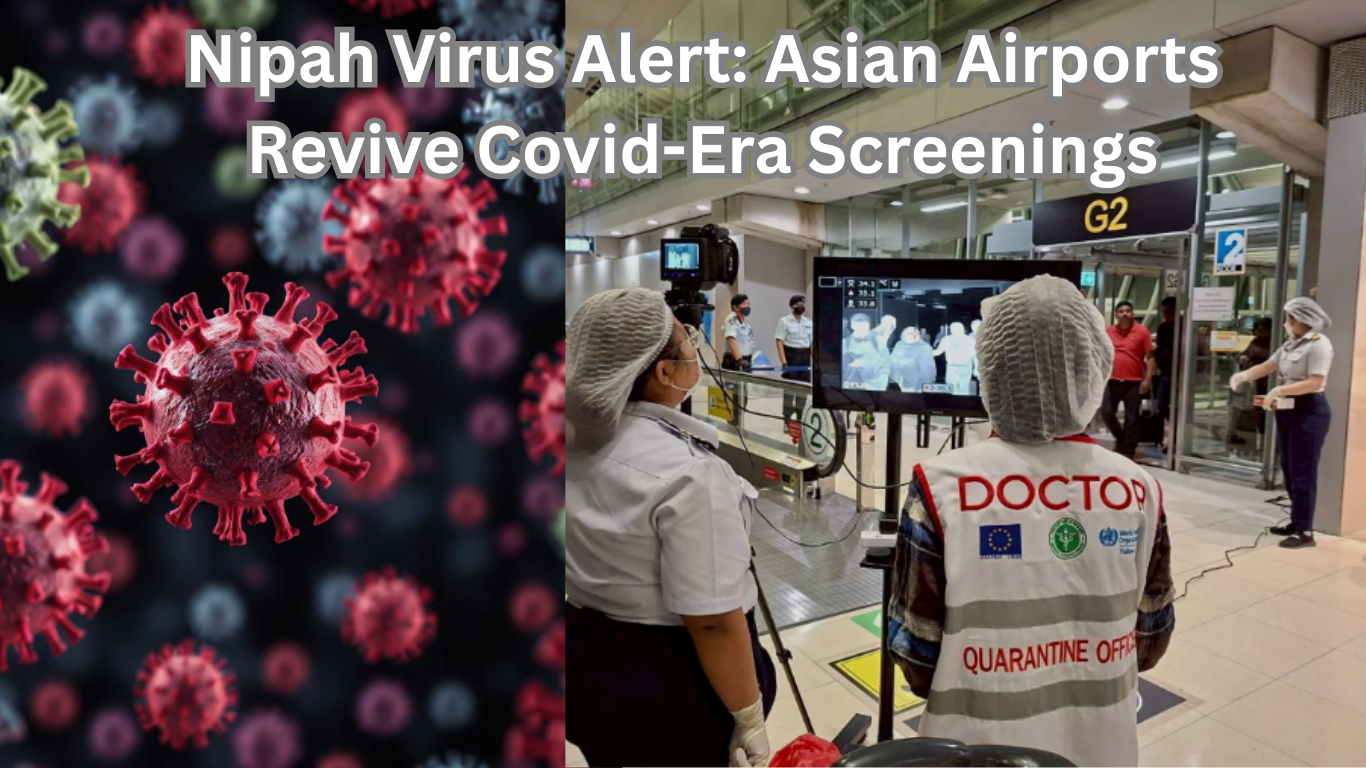
Several Asian countries are reinstating Covid-era health screening measures at international airports following the confirmation of Nipah virus cases in India’s West Bengal state, as health authorities work to prevent wider spread of the virus. The step comes amid heightened concern over the disease’s high fatality rate and the ease of travel between South Asian nations.
India’s health ministry has confirmed two laboratory-verified Nipah virus infections in West Bengal, linked to a small cluster first detected in late December 2025. Decades of experience with the virus in India — including outbreaks in West Bengal in 2001 and in Kerala as recently as 2018 — have led officials to adopt rapid response protocols, including enhanced disease surveillance and contact tracing.
Nipah is a zoonotic virus, primarily transmitted from animals such as fruit bats or pigs to humans, and can spread between people through close contact or exposure to contaminated biological fluids. The virus can cause severe respiratory illness and encephalitis (brain inflammation), with fatality rates in past outbreaks estimated between 40 and 75 per cent in some cohorts. There is currently no approved vaccine or specific antiviral treatment, and care focuses on supportive therapy.
Table of Contents
ToggleAirport Health Screenings Reintroduced Across Region
Airport authorities in countries including Thailand, Nepal, Taiwan, Malaysia and China have reinstated Covid-style health checks for travelers arriving from or transiting through India, especially from West Bengal and surrounding areas. These measures include temperature screenings, health declaration forms, and visual monitoring for symptoms such as fever, headache or respiratory distress — tools that became familiar to many during the Covid-19 pandemic.
In Thailand, officials have deployed thermal scanners and health checkpoints at major international hubs such as Suvarnabhumi, Don Mueang and Phuket airports, where staff are monitoring flights originating from the Kolkata region of West Bengal. Passengers who exhibit symptoms or report recent illness are referred for secondary evaluation, and “health beware” cards advising them on warning signs and next steps are being distributed to all arrivals on affected routes.
Nepal’s government has similarly stepped up screening at Tribhuvan International Airport in Kathmandu, as well as at key land border crossings with India. Health desks have been set up to check passengers for fever and other potential Nipah symptoms, with protocols to connect anyone showing signs of concern to follow-up medical care.
Taiwan is moving forward with plans to classify Nipah infection as a Category 5 notifiable disease, which would trigger mandatory reporting requirements and rapid containment measures if suspected cases occur. This elevated classification reflects the virus’s potential to cause serious outbreaks despite limited numbers of current infections.

Why the Renewed Alert
Health authorities stressing precaution note that while the number of confirmed cases remains low and no Nipah infections have yet been reported outside India, the decision to reinstate screening controls reflects the virus’s severity and history of clustered outbreaks in South Asia. Regional responses aim to detect potential cases early and prevent importation via travel corridors that link India to Southeast and East Asia.
The World Health Organization (WHO) lists Nipah as a priority pathogen due in part to its high lethality and the absence of effective medical countermeasures, even though its current transmission dynamics are thought to be less efficient than those of respiratory viruses such as SARS-CoV-2.
Public Health Measures in India
Within India, health authorities have activated enhanced surveillance and field investigation teams in West Bengal, focusing on contact tracing, laboratory testing, and quarantine of close contacts. Of the individuals linked to the confirmed cases, nearly 200 close contacts have so far been identified and monitored, with all returning negative results in follow-up testing.
Public health messaging encourages hygiene practices, avoidance of raw date palm sap and other foods with possible animal contamination, and early reporting of symptoms such as fever, vomiting or neurological changes. Past Nipah outbreaks have been associated with consumption of contaminated local foods and direct contact with infected animals, particularly fruit bats.
What Travellers Should Know
Travelers planning flights to or through Asian nations are advised to be aware of the evolving situation and prepare for potential health screening measures at airports. Precautions may include:
Filling out health declaration forms before or upon arrival.
Undergoing temperature checks or symptom screening at checkpoints.
Being referred for secondary health checks if symptoms are detected.
Authorities emphasize that these measures are intended as precautionary safeguards, not travel bans, and that international travel remains open, barring specific quarantine orders for symptomatic individuals or direct exposures.
Looking Ahead
While the current outbreak appears limited and contained through diligent public health action, officials across Asia remain vigilant. Renewed airport screenings, heightened surveillance, and international communication among health agencies underscore the region’s commitment to preventing the spread of a virus that, though rare, carries significant health risks.
Public health experts advise travelers and local communities alike to stay informed about symptoms, maintain hygiene best practices, and follow updated guidance from health ministries and global bodies as the situation evolves.
Visit GPS NEWS HUB