
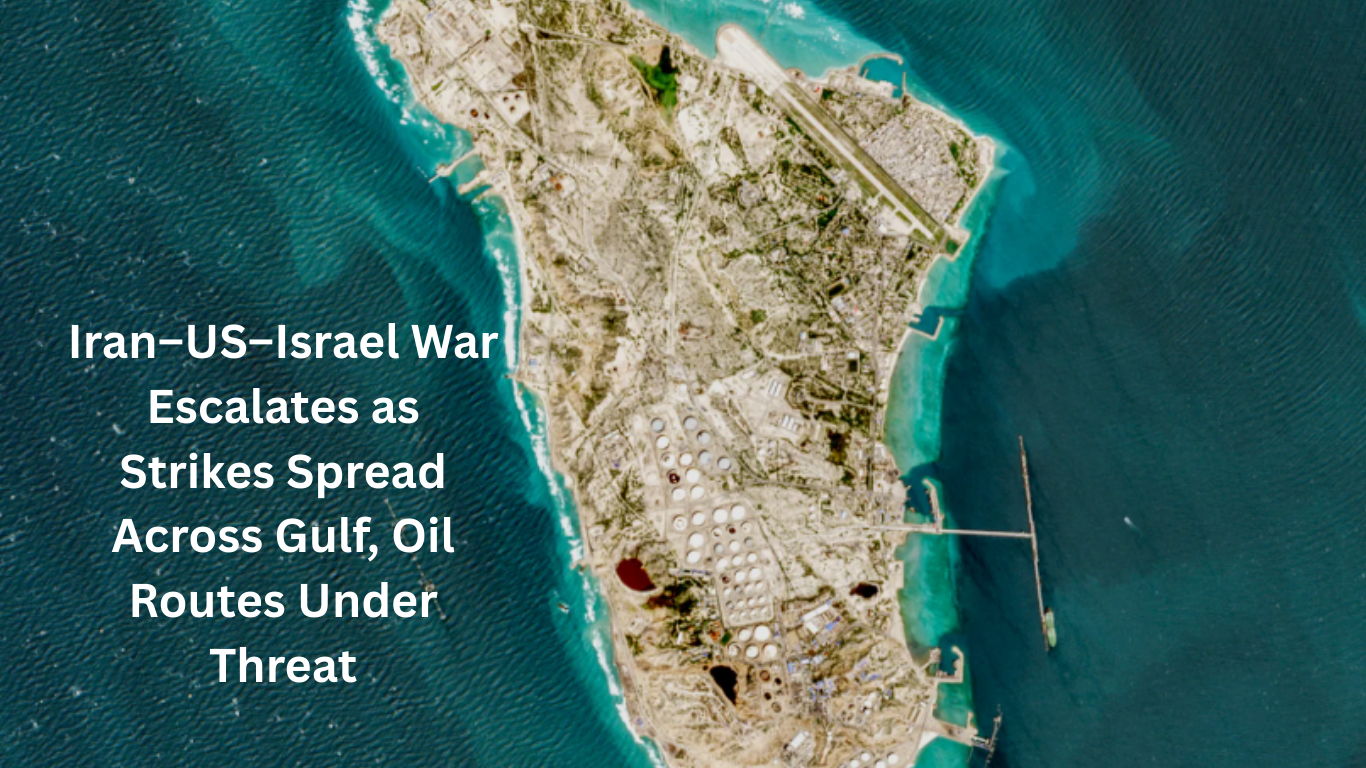
The ongoing war involving Iran, the United States, and Israel entered another volatile phase on March 14, with fresh missile strikes, drone attacks, and escalating military deployments across the Middle East. The conflict, which began after large-scale US-Israeli attacks on Iranian targets in late February, has quickly expanded into a regional confrontation affecting shipping routes, oil infrastructure, and several neighbouring countries.
Table of Contents
ToggleIntensifying Airstrikes and Missile Attacks
Over the past 24 hours, multiple explosions were reported across Iranian cities, including Tehran, Bandar Abbas, and Tabriz, as US and Israeli forces continued airstrikes targeting Iranian military facilities and strategic infrastructure. According to US Central Command, American forces struck more than 90 Iranian military targets on Kharg Island, a key location connected to Iran’s oil exports.
Kharg Island is considered the backbone of Iran’s energy sector, handling the majority of the country’s crude oil exports. The strikes reportedly targeted missile bunkers, storage facilities, and other military assets while avoiding direct damage to oil export infrastructure, at least initially. Analysts say the attack represents a major escalation and could further intensify tensions in the Gulf region.

Iranian Retaliation Across the Region
In response, Iran has launched waves of missiles toward Israeli territory, triggering air-defence systems across Israel and causing explosions in several areas. At the same time, Iranian-backed forces and drones have reportedly targeted sites across the Gulf, including ports, airports, and diplomatic facilities.
Authorities in Bahrain reported intercepting more than 100 missiles and over 200 drones since the start of the conflict. Meanwhile, attacks on energy facilities and a fire at the UAE’s Fujairah oil hub have heightened fears that the war could disrupt global oil supplies.
Iran has also warned residents near major ports in the United Arab Emirates to evacuate, signalling that these locations could become targets if US operations continue. Tehran has framed the attacks as retaliation for what it calls “aggression” by the United States and Israel.
Strategic Importance of the Strait of Hormuz
The conflict has drawn global attention because of its potential impact on the Strait of Hormuz, a narrow waterway through which roughly one-fifth of the world’s oil supply passes. Iran has threatened restrictions on shipping, raising concerns among energy markets and international shipping companies.
US President Donald Trump has urged allied countries to send naval forces to help secure the strait and protect commercial vessels moving through the region. The United States is also deploying additional Marines and naval assets to the Middle East as the war continues.
Rising Human and Regional Impact
Beyond military operations, the conflict is increasingly affecting civilians and regional stability. Reports indicate casualties from strikes in Iran and neighbouring countries, while drone attacks and missile interceptions have been recorded in Iraq, Saudi Arabia, and Israel. Damage has also been reported to cultural sites and infrastructure in Iran, highlighting the broader humanitarian and economic consequences of the war.
Despite calls for diplomacy, there are currently no clear signs of a ceasefire. Iranian officials have said negotiations cannot begin unless US and Israeli strikes stop, while Washington has signalled that military pressure will continue. With attacks expanding across multiple fronts and key energy routes under threat, analysts warn that the conflict could widen further and reshape security dynamics across the Middle East in the weeks ahead.
International leaders and organisations have urged restraint, warning that a prolonged confrontation could destabilise the entire region and trigger a broader global economic shock. Rising oil prices, disruptions to international shipping routes, and the risk of further military escalation have heightened concerns among global markets and governments alike.
Diplomatic efforts by European nations and regional mediators are ongoing, but progress remains uncertain as both sides maintain firm positions. If the fighting continues at its current pace, experts fear the conflict could evolve into a prolonged regional war with far-reaching political, economic, and humanitarian consequences.
VISIT GPS NEWS HUB