
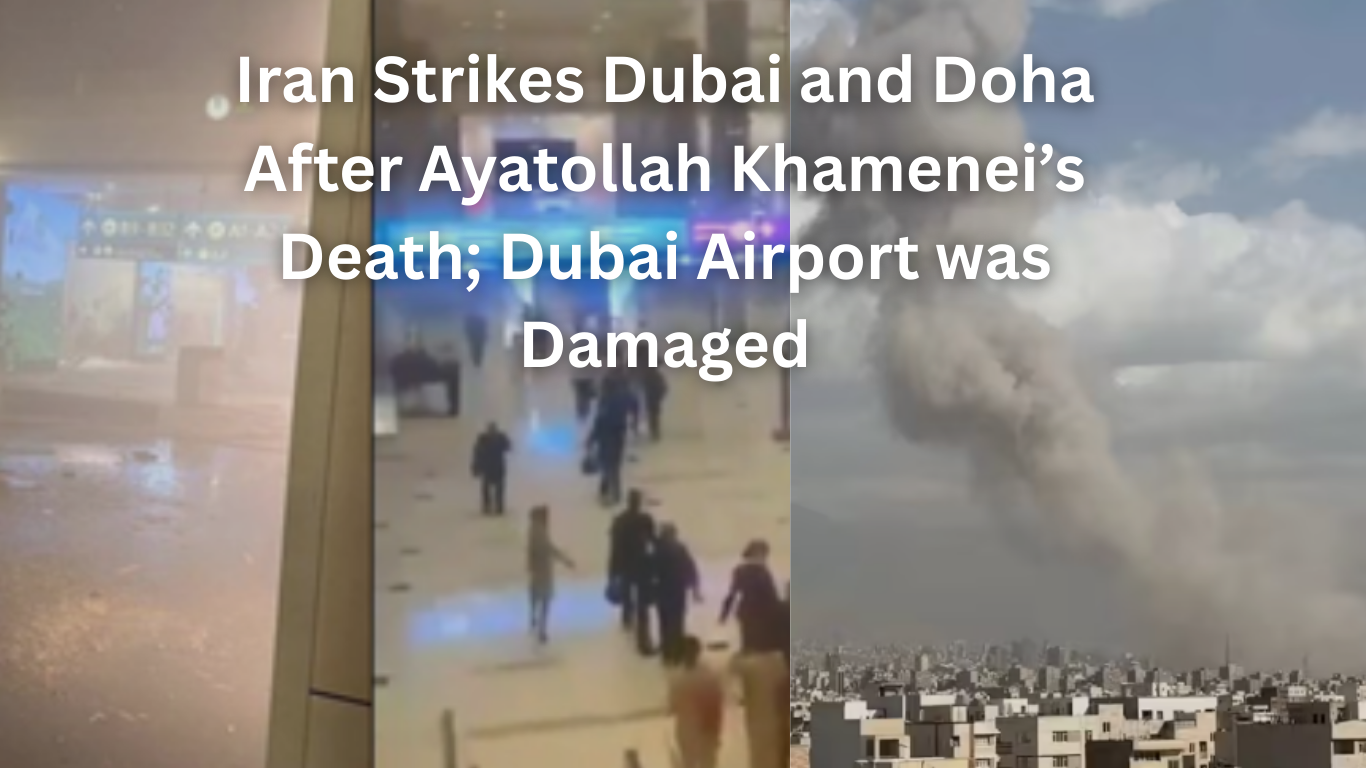
Iran launched a series of overnight missile and drone strikes on key locations across the Gulf region, including Dubai International Airport, in retaliation for a US-Israeli airstrike that killed Supreme Leader Ayatollah Ali Khamenei late last week. The unprecedented attacks triggered air-raid sirens in Doha, Qatar, alerts in Israel, and widespread concern over escalating regional conflict.
The strikes mark one of the most direct acts of military retaliation by Iran against Gulf states in recent history, raising fears of broader confrontation involving multiple nations and drawing urgent calls for de-escalation from international leaders.
Table of Contents
ToggleDubai Airport Damaged, Several Injured
According to officials and local media reports, several drones and missiles struck the area around Dubai International Airport, causing damage to infrastructure and disrupting flights. At least four people were reported injured in the attacks, though authorities did not immediately classify the injuries as life-threatening.
Footage from the airport showed smoke plumes rising from damaged buildings, while airport operations were suspended as emergency services responded. Passengers were evacuated from terminals, and flights were diverted to other hubs as security forces sealed off affected zones.
The United Arab Emirates, long viewed as a relatively stable Gulf hub, has been drawn into the conflict despite previously maintaining a cautious balancing act between Western alliances and regional diplomatic engagement.

Sirens, Alerts Across the Region
In Doha, Qatar, air-raid sirens sounded in the early hours as local authorities activated civil defence systems. While there were no immediate reports of casualties in the Qatari capital, residents took shelter as a precaution, and flights in and out of Hamad International Airport were temporarily halted.
In Israel, military and civil defence alerts were issued as at least some Iranian projectiles were reported to have traversed nearby airspace. Israel’s defence forces said that they intercepted several incoming threats using air defence systems, and assessments were ongoing to determine the extent of damage or landing sites.
Iran’s Justification for Strikes
Iran’s government framed the strikes as retaliation for the killing of Ayatollah Ali Khamenei — the nation’s supreme leader and a central figure in the Islamic Republic’s political and religious hierarchy — in a strike carried out jointly by the United States and Israel. Tehran’s leadership declared the attacks a necessary act of vengeance, accusing its adversaries of violating Iranian sovereignty and international law.
State media released statements emphasising that the strikes targeted military infrastructure and allied positions, and that Iran acted in self-defence “against aggression threatening our security and dignity.”
Global Reaction and Diplomatic Tension
World leaders reacted with alarm to the escalation. The United Nations called for immediate restraint and urged all parties to refrain from actions that could further inflame conflict in a region already burdened by long-standing geopolitical rivalries.
Western governments, including the United States and members of the European Union, issued statements condemning violence while also urging diplomacy. Several nations expressed concern over civilian safety and the potential for retaliation cycles that could draw multiple states into open conflict.
Arab League representatives called for de-escalation and emphasised the need to protect civilians and critical infrastructure. India, among other countries with citizens in the region, advised nationals to exercise caution and stay informed through official channels.
Impact on Civilians and Regional Stability
The immediate impact of the strikes has been disruptive. Dubai — a global aviation and business hub — faces delays and cancellations that could ripple through international travel and commerce. Airports in Doha and across the Gulf adjusted operations in response to civil defence alerts.
In Israel, the threat of projectiles crossing borders has again put civilian populations on high alert, with shelters activated and emergency protocols enforced in several towns and cities near the frontier.
Economists and security analysts warn that prolonged instability could hit oil markets, investor confidence, and trade routes vital to global supply chains. The Gulf region, central to global energy exports and finance, may see heightened risk premiums on investment and insurance in the near term.
What Comes Next
Diplomatic channels are reportedly in urgent contact as world powers seek to prevent further escalation. Talks involving the United States, Gulf Cooperation Council (GCC) states, and other stakeholders are expected in coming days, with a focus on ceasefire arrangements and humanitarian safeguards.
Analysts note that the current crisis may define regional geopolitics for years to come, influencing military alliances, energy markets, and global diplomatic alignments.
For now, the Middle East remains on edge, as citizens and governments alike brace for potential aftershocks of one of the most significant confrontations in recent memory.j
Visit GPS NEWS HUB