
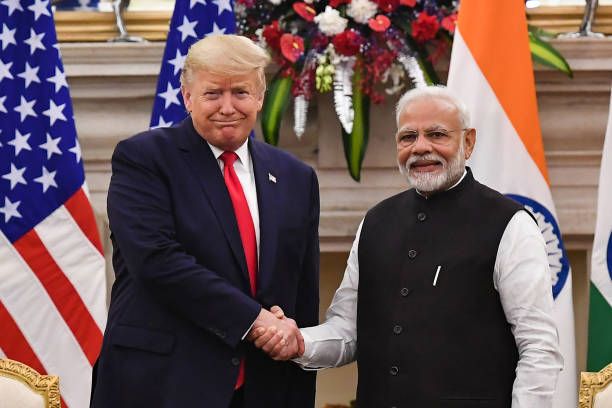
India’s Ministry of External Affairs has sharply rejected claims by a senior U.S. administration official suggesting that Prime Minister Narendra Modi’s schedule was responsible for delays in a pending India–United States trade deal, saying the comment was “not accurate” and did not reflect the full context of the negotiations.
The response comes after a high-profile political aide to former U.S. President Donald Trump attributed the lack of progress on a comprehensive trade agreement between the world’s two largest democracies to Modi’s failure to personally call Trump to push the talks forward. Indian officials said this characterization was misleading and did not represent the actual status of talks between New Delhi and Washington.
In a brief statement, the MEA said it was “not accurate” to single out Modi’s personal engagement as the reason behind the stalled negotiations. The ministry highlighted that trade discussions are conducted through established diplomatic and bureaucratic channels, with both sides engaging regularly at multiple levels. The MEA added that any suggestion that a lack of a direct phone call to former President Trump was responsible for slow progress oversimplified a complex process involving economic policy, regulatory issues, and broader geopolitical considerations.
Table of Contents
ToggleBackground: Ongoing Trade Negotiations
Talks between India and the United States on a comprehensive trade agreement have been ongoing for several years, covering key areas such as tariffs, market access, digital trade, and intellectual property protections. While both economies have expressed interest in deepening economic ties, disagreements over tariff reductions, agricultural imports, and economic security issues have slowed progress.
A U.S. Commerce Department statement earlier this week — reported by Indian and international media — quoted a senior Trump adviser as saying that the absence of a bilateral phone call between Modi and Trump was a significant factor in the delay of the trade deal. The comment sparked immediate reaction in New Delhi, where government sources emphasized that such negotiations are multifaceted and involve numerous stakeholders beyond individual leaders.
According to diplomats close to the talks, India has repeatedly underscored its willingness to engage with U.S. counterparts at the appropriate levels, while asserting that decisions on trade agreements must align with national economic priorities. Officials from both countries have met in recent months to discuss a range of issues, but have yet to announce any major breakthroughs.

India’s Official Response
The MEA’s rebuttal emphasized that trade talks are a matter of state-to-state engagement rather than personal diplomacy, and that suggestions to the contrary risk misrepresenting the conduct of international negotiations. India’s position is that trade agreements require detailed technical discussions on tariffs, regulatory harmonization, investment protections, and digital economy frameworks, all of which involve subject-matter experts and negotiating teams.
A senior Indian official, speaking on condition of anonymity due to the sensitivity of the negotiations, said that the government was focused on ensuring that any trade agreement serves India’s long-term economic interests, including protections for small industries and strategic sectors. The official reiterated that both countries have much to gain from enhanced economic cooperation, but cautioned that such gains must be balanced with domestic policy priorities.
Political and Economic Context
Trade policy has become a politically charged topic in both countries. In the United States, discussions around trade often intersect with broader debates over job security, manufacturing competitiveness, and economic nationalism. In India, policymakers have emphasized self-reliance initiatives and careful calibration of tariff policies to protect emerging sectors. Together, these differing priorities have added complexity to the trade negotiations.
Analysts warn that oversimplifying the causes for delayed progress — for example, by attributing it to a single personal communication — detracts from the substantive challenges that remain. These include negotiation on sensitive agricultural imports, data localization norms that affect digital firms, and tariff reductions in key industries such as steel and automobiles.
Trade experts in New Delhi and Washington noted that while high-level engagement between political leaders can signal intent and urgency, the substance of trade agreements rests on sustained dialogue between technical negotiators and policy specialists. “These are not deals that hinge on a single phone call,” said one economist familiar with the process.
Future Prospects
Despite the public exchange of statements, officials from both countries have indicated a continued interest in pushing forward with trade talks. Future meetings between economic and trade representatives are anticipated, though no formal schedule has yet been announced. Observers say successful negotiations will require addressing substantive policy differences and building mutual confidence on key issues such as market access and regulatory practices.
As talks continue, analysts suggest that both nations have strong incentives to deepen economic relations, given their shared interest in counterbalancing global trade pressures and advancing digital economy frameworks. How soon a comprehensive trade deal might be concluded remains unclear, but both sides maintain that they are committed to ongoing engagement.
Visit GPS NEWS HUB