
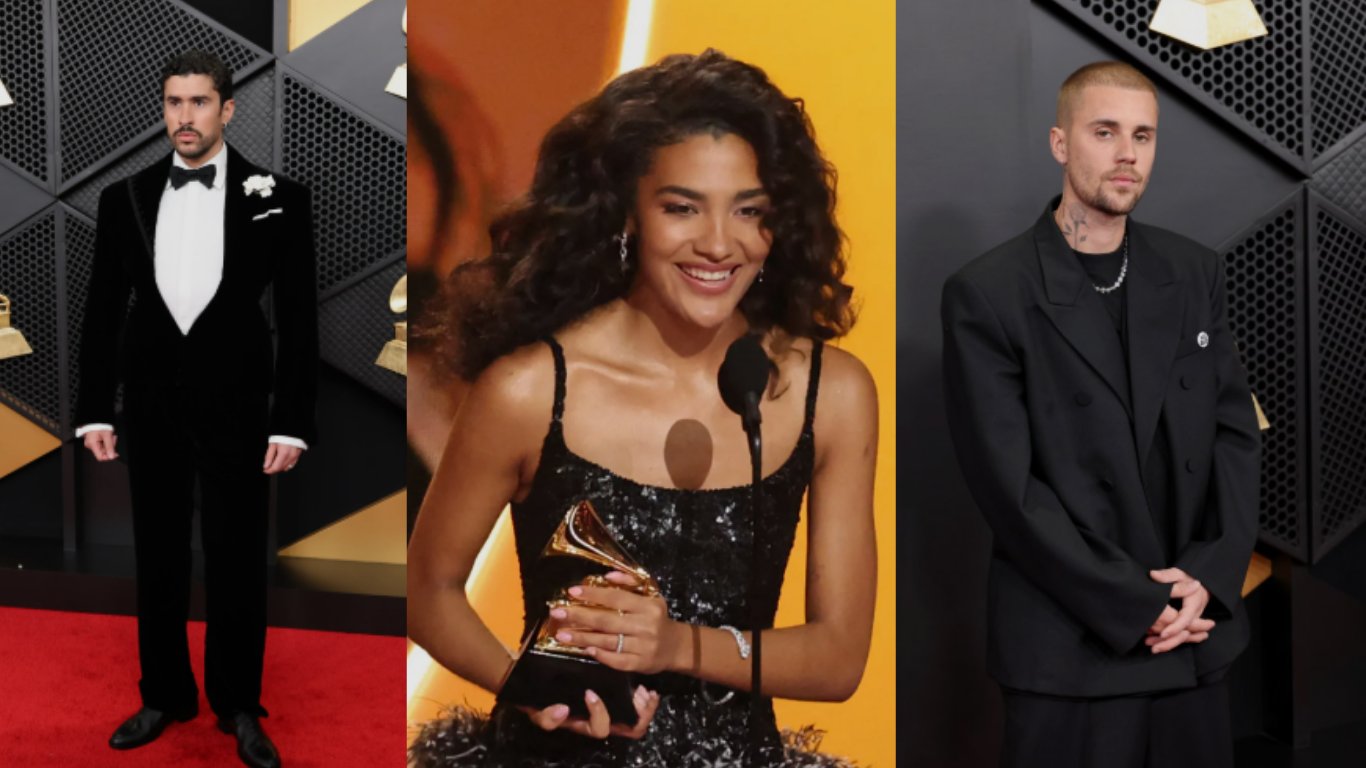
Music’s biggest night, the 68th Annual Grammy Awards, unfolded on February 1 at the Crypto.com Arena in Los Angeles, celebrating the most outstanding recordings, artists and performances from the eligibility period of August 31, 2024, to August 30, 2025. The ceremony brought iconic wins, historic milestones and standout live moments that captured the industry’s evolving diversity and creative excellence.
The show — hosted for the sixth and final time by comedian Trevor Noah — saw Bad Bunny’s Debí Tirar Más Fotos make history by becoming the first all-Spanish-language album to win Album of the Year, underscoring the global reach of Latin music and its influence on mainstream culture.
Table of Contents
ToggleMajor Winners and Historic Firsts
Bad Bunny, a global sensation from Puerto Rico, took home Album of the Year along with Best Música Urbana Album, reinforcing his artistic versatility and the project’s cross-cultural resonance. In his acceptance speech, delivered largely in Spanish, he celebrated Puerto Rican culture and honored the resilience of immigrants and people enduring loss, reflecting music’s power to bridge communities.
Kendrick Lamar and SZA earned Record of the Year for “Luther,” cementing Lamar’s dominance in rap and hip-hop. Kendrick also won Best Rap Album for GNX, marking yet another milestone in his influential career.
Billie Eilish secured Song of the Year for “Wildflower,” a tribute to her emotional songwriting and enduring appeal. Meanwhile, Olivia Dean, the British singer-songwriter, was named Best New Artist, delivering an emotional acceptance speech in which she honored her family and heritage, describing herself as “a product of bravery.”
The awards also recognised sterling work across genres: Lady Gaga won Best Pop Vocal Album and Best Dance-Pop Recording, while Lola Young took Best Pop Solo Performance. Other categories celebrated artists like Leon Thomas (Best R&B Album) and Turnstile (Best Rock Album), reflecting the ceremony’s broad musical spectrum.
Cultural Impact and Industry Conversation
The 2026 Grammys not only highlighted stellar artistic achievements, but also sparked conversation about representation and genre diversity. While the night celebrated major winners like Bad Bunny and Kendrick Lamar, some fans and commentators noted the continued absence of K-Pop in top category wins, elevating discussion on music’s global evolution and award inclusion.
The ceremony also marked notable achievements beyond music performance. Filmmaker Steven Spielberg achieved EGOT status — having now won an Emmy, Grammy, Oscar, and Tony — after receiving a Grammy for Best Music Film for Music By John Williams, chronicling the legendary composer’s career.
Justin Bieber’s Intimate Grammy Stage Moment
Among the evening’s unforgettable performances was Justin Bieber’s stripped-down rendition of “Yukon” from his 2025 album Swag. Bieber’s appearance marked his first live Grammy performance since 2022 and instantly became a talking point. Opting for a minimalist set and wardrobe — performing in silk boxer shorts and socks with a purple electric guitar — he showcased vulnerability and raw vocal talent in an intimate interpretation that stood out from the night’s spectacle. His bold look and heartfelt delivery sparked mixed reactions online, drawing both praise and humorous commentary from fans.
Bieber’s Swag was itself nominated for Album of the Year and Best Pop Vocal Album, with tracks like “Daisies” also recognized among major performance categories, highlighting the Canadian artist’s enduring relevance.

Looking Ahead
As the 2026 Grammy Awards closed, the night affirmed music’s dynamic diversity and the art form’s continued capacity to elevate global voices. From Bad Bunny’s historic win to Olivia Dean’s breakthrough recognition and Justin Bieber’s memorable stage moment, this year’s ceremony will be remembered as a celebration of artistic breadth and cultural resonance — a fitting tribute to music’s universal language.
Visit GPS NEWS HUB