
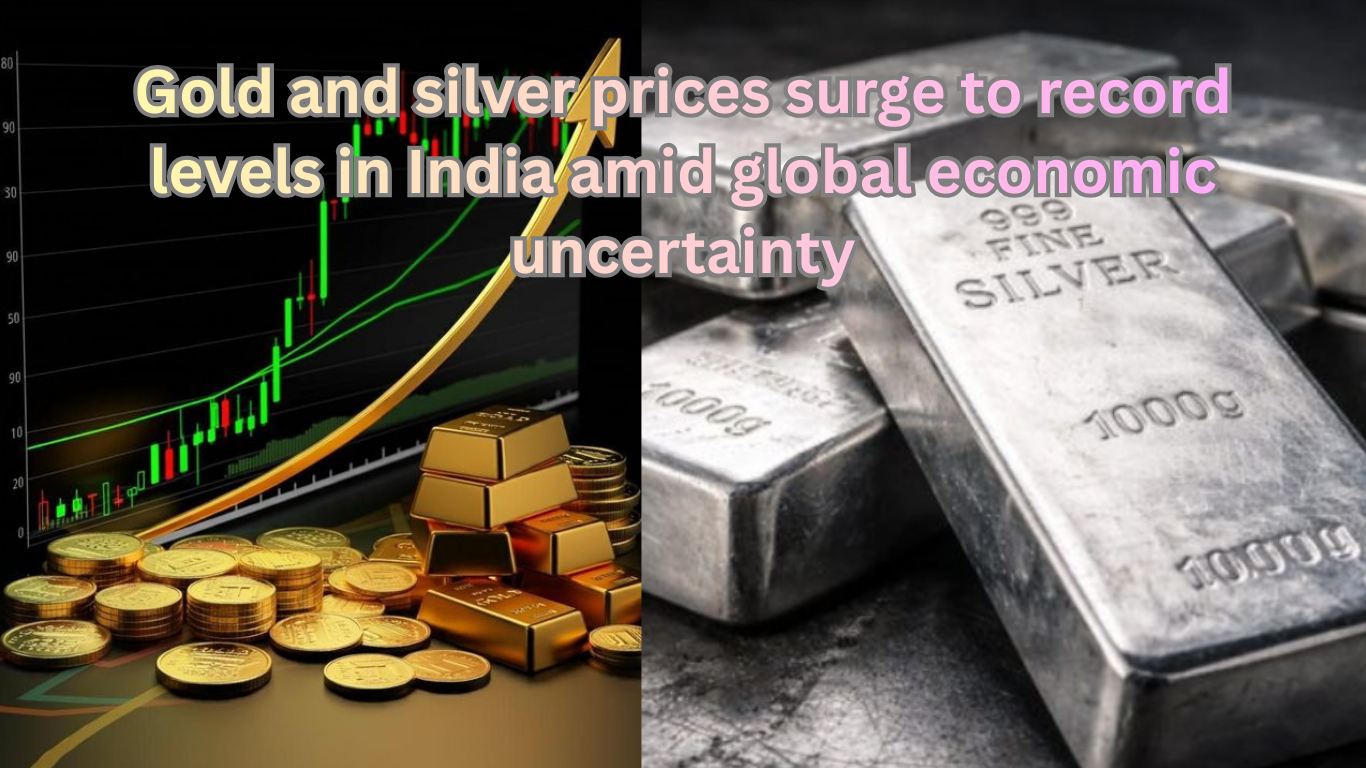
India’s Economic Survey 2026 projects that gold and silver prices will remain elevated even as broader global commodity prices are expected to soften in the coming fiscal year, driven largely by ongoing geopolitical tensions and strong safe-haven demand. The survey, tabled in Parliament this week, highlighted the persistent appeal of precious metals among investors amid market volatility and uncertain global growth prospects.
Precious metals have diverged sharply from other commodities — notably crude oil and base metals — which are forecast to experience softer price trends in fiscal 2026-27. The survey noted that while subdued energy prices and moderate global growth may ease inflationary pressures in some sectors, gold and silver continue to attract investment interest as a hedge against risk.
Table of Contents
ToggleRecord High Prices in Domestic Markets
On the Indian Multi Commodity Exchange (MCX) on January 29, 2026, silver prices breached a historic level of ₹4 lakh per kilogram, while gold futures reached ₹1.83 lakh per 10 grams, powered by strong global trends and robust investor inflows. These all-time highs illustrate the strength of demand for precious metals as safe-haven assets amid elevated geopolitical volatility and economic downside risks.
Analysts said the rally reflects a combination of factors including global uncertainty, a weakening currency situation in some emerging markets, and continued demand from institutional and retail investors. Against this backdrop, gold and silver’s reputation as stores of value has been reinforced.

Safe-Haven Demand and Global Dynamics
Precious metals generally outperform when investors seek stability during turbulent times. Gold, in particular, reached record levels on global markets as prices climbed past key psychological levels amid volatility in major economies. In January 2026, international gold benchmarks surpassed $5,100 per ounce, one of the strongest rallies in recent years, driven by weak equity markets, central bank buying, and persistent geopolitical uncertainty.
Silver, while traditionally more volatile and linked to industrial demand, has also benefited from safe-haven buying. The white metal’s dual role as both a precious and industrial metal has attracted diversified investment interest, contributing to its significant price gains.
According to forecasts by analytics firms, the prices of both gold and silver could continue their upward trajectory through 2026. Some market intelligence reports predict gold could reach between ₹1.75 lakh and ₹1.95 lakh per 10 grams and silver between ₹3.80 lakh and ₹4.60 lakh per kilogram by year-end, assuming sustained global uncertainty and persistent demand.
Economic Survey’s Broader Perspective
The Economic Survey highlighted how elevated precious metal prices are likely to influence India’s inflation and credit patterns. While core inflation (excluding food and energy) remains relatively controlled, rising gold and silver prices have kept headline inflation somewhat sticky, adding complexity for policymakers monitoring price trends in the broader economy.
India’s import basket continues to be heavily weighted toward crude oil and precious metals, with gold imports showing significant increases in recent years. The survey noted that higher gold prices have driven increased import values and influenced credit dynamics, such as a notable rise in personal loans secured against gold jewellery.
Although gold imports are a major contributor to the trade deficit, demand persists despite record prices, driven by cultural preferences and investment considerations. Silver imports have similarly seen strong momentum, reflecting the metal’s appeal amid both safe-haven and industrial demand patterns.
Investor and Market Reactions
Market participants, including dealers and analysts, have pointed out that the metals rally also reflects currency movements — particularly the depreciation of the Indian rupee against the U.S. dollar — which tends to make gold and silver more expensive in domestic terms. In turn, investors have increased allocation to these assets for diversification and risk mitigation.
Some commentators caution that while the current rally is robust, momentum may fluctuate as global economic data, central bank policy decisions, and geopolitical developments evolve. Nevertheless, the current price landscape underscores the enduring role of precious metals in global investment portfolios.
Outlook for Consumers and Investors
For investors and consumers in India, the sustained rally in gold and silver prices means that these metals remain both a store of value and a reflection of broader global anxieties. While jewellery demand may soften due to high costs, investment demand — particularly through physical purchases, exchange-traded funds (ETFs), and metal backed savings schemes — continues to keep markets active.
As global uncertainties persist, precious metals are likely to remain on the radar of cautious investors looking to hedge against downside risks, while policymakers will monitor the implications for inflation and trade balances in the months ahead.
Visit GPS NEWS HUB