
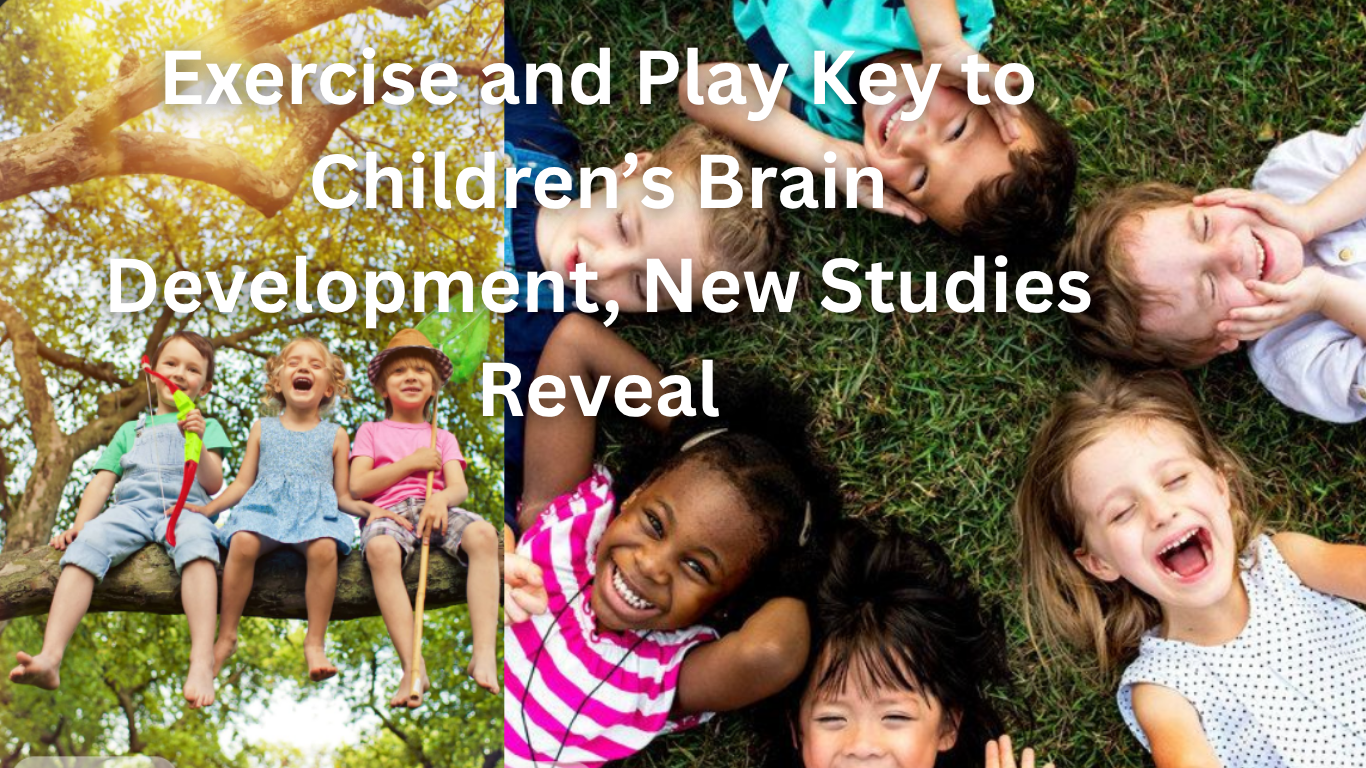
Two new studies published in peer-reviewed journals have strengthened the scientific case for prioritising physical activity and unstructured play in early childhood education, finding that both are critical drivers of cognitive development in children — and that schools may not be doing enough to support either.
Table of Contents
ToggleExercise Sharpens Young Minds, Study Finds
A comprehensive review published in Frontiers in Psychology by researchers at Fujian Normal University, China, has concluded that physical activity directly enhances children’s memory, attention, academic performance, and executive functions — the mental skills that govern focus, impulse control, and decision-making.
The review, which followed PRISMA guidelines and drew on peer-reviewed studies from five electronic databases, found that physical activity positively influences executive functions, attention, memory, and academic performance in children, with cognitively engaging and moderate-to-vigorous activities showing the most consistent benefits.
The researchers identified a key biological mechanism behind the link. Physical activity enhances serotonin levels, which in turn supports neurogenesis and synaptic plasticity, exerting positive effects on the development of memory, learning, and executive function in early childhood. In plain terms, exercise helps grow and strengthen brain connections in children at a critical stage of development.
The study also found benefits beyond the classroom basics. Activities requiring fine motor coordination have been linked to gains in visual-spatial processing and task-switching capabilities. Even performance in mathematics and language skills improved in children who participated in structured physical activity programmes.
Not All Exercise Is Equal
However, the researchers cautioned that exercise design matters significantly. Some findings indicate that high-intensity exercise may transiently impair attention and cognitive performance in children. The type, duration, and timing of physical activity all influence outcomes, and poorly designed programmes can do more harm than good.
The review specifically highlighted “Eduball” — a tool combining physical activity with academic content using balls printed with letters, numbers, and symbols — as a promising classroom intervention. It has shown promise for children with dyslexia, improving reading and writing skills significantly.
Crucially, the researchers also warned against sedentary classroom culture. Children who had higher levels of physical activity but more sedentary time in kindergarten performed relatively poorly in speech skills as they entered first grade , underlining that movement breaks and active recess are not optional extras — they are educationally essential.
Let Children Play, Researchers Urge
A separate study from SWPS University in Poland and Istanbul University, published in the journal Early Education and Development, focused on pretend play and its role in children’s cognitive and social development — with equally striking findings.
Researchers analysed the behaviour of 93 Polish children aged 3 to 6 during a 30-minute play session, focusing on three aspects: organisation, elaboration of scenarios, and imagination.
The key finding was that children’s engagement follows a distinct rhythm. The peak period, when children are most active and fully immersed in the experience, occurs between 10 and 15 minutes after the start of play a pattern that held regardless of age or gender.
Girls scored higher in all measured aspects, showing greater attention to story structure and detail, with play more often based on creating complex narratives. Boys more often chose play focused on action and movement. However, the smallest gender differences were observed in imagination, where both boys and girls were similarly skilled at creating fantasy scenarios.
Age also played a significant role. Three-year-olds play more spontaneously but lose interest more quickly, while older children aged 5 to 6 can concentrate for much longer periods and become more engaged from the very beginning.
Study author Natalia Józefacka of SWPS University emphasised that pretend play is far from idle time. Play time should be long enough for children to develop an imagined scenario and practice regulatory skills — this is a stage on which they can practice things they will need later in school.

What Schools and Parents Should Do
Together, the two studies send a clear message to educators and parents: children need to move and play — not just sit and study. The Frontiers review called for schools, families, and communities to collaborate in promoting physical activity, while the play study urged preschools specifically to rethink their balance between structured learning and free play.
Both sets of researchers agreed that the school-age and preschool years represent a narrow, critical window for cognitive development — one that cannot be recovered once it passes.
Sources: Frontiers in Psychology (Dong & Wang, 2026, doi: 10.3389/fpsyg.2025.1720391); Early Education and Development (Józefacka & Hamamcı, 2025, doi: 10.1080/10409289.2025.2562146), via EurekAlert / SWPS University
Visit GPS NEWS HUB